IV Vitamin Therapy: What the Science Says, Who It's For, and What We Offer
Dr. Rebecca Liu separates IV therapy hype from evidence, explains who benefits clinically from intravenous vitamins and hydration, and describes how Moses Medical's medically supervised approach differs from the IV bars popping up across the city.

Dr. Rebecca Liu · Medical Weight Loss
August 1, 2026
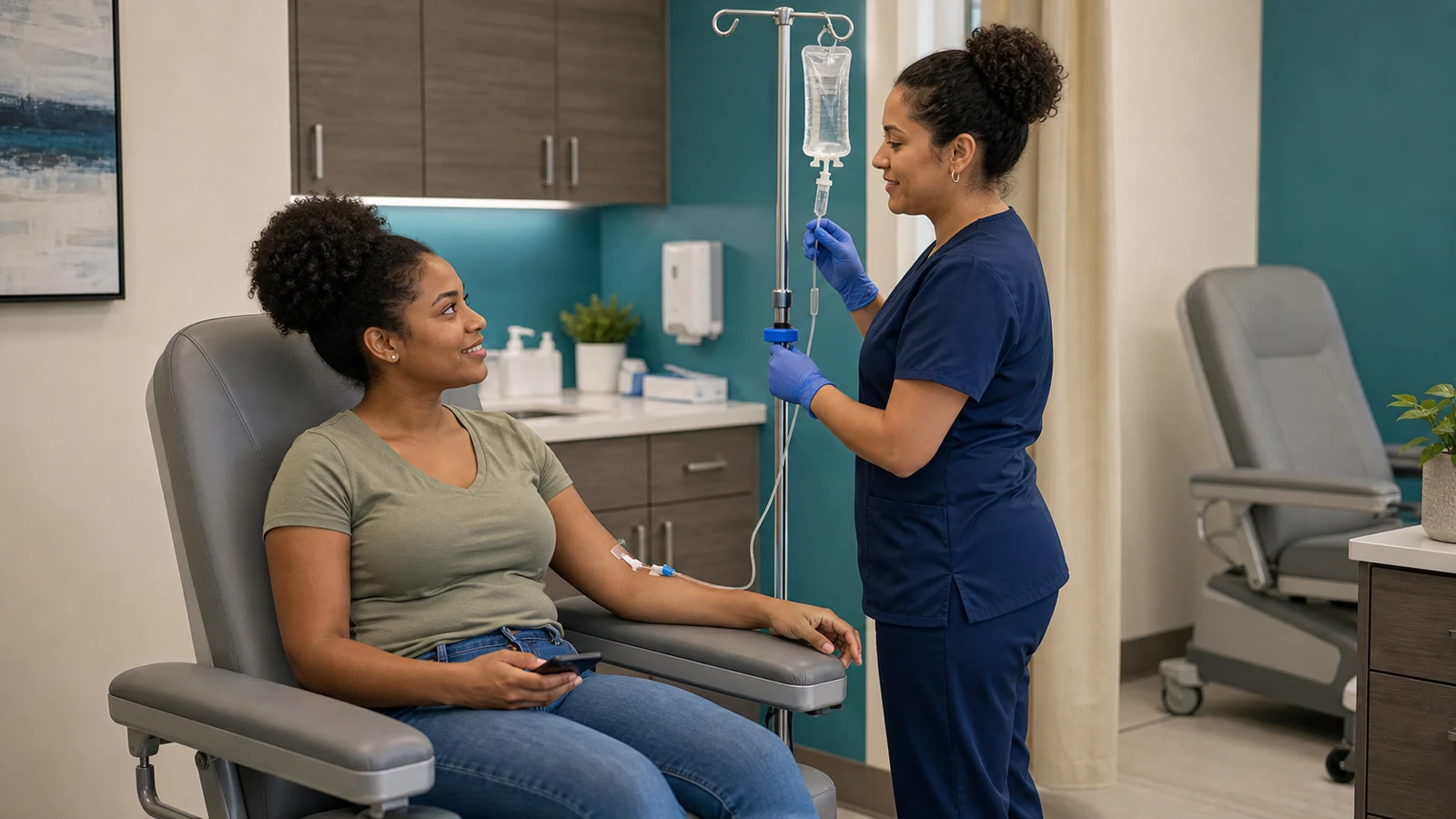
IV vitamin therapy has gone from niche medical treatment to mainstream wellness trend in the span of a few years. There are IV bars in Manhattan that will hook you up to a drip in a lounge chair for $250 while you scroll your phone. There are mobile IV services that come to your apartment after a rough night out. And there are social media influencers who swear that weekly vitamin drips are the secret to their energy, skin, and immune function.
Some of this is marketing. Some of it has a genuine clinical basis. As a physician, my job is to help you tell the difference.
I’m Dr. Rebecca Liu, a board-certified obesity medicine specialist and primary care provider at Moses Medical. I oversee our IV therapy program because I believe that when IV therapy is administered in the right clinical context, with proper screening, it can be genuinely beneficial. I also believe that most of what you see online misrepresents the evidence.
Here is what the science actually says.
How IV Therapy Works — and Why It Differs from Oral Supplements
When you swallow a vitamin pill, it goes through your digestive tract, where absorption is influenced by stomach acid, intestinal health, competing nutrients, and individual metabolic differences. Depending on the nutrient, oral bioavailability — the percentage that actually enters your bloodstream — ranges from 10% to 70%.
IV therapy bypasses the digestive system entirely. Vitamins, minerals, and fluids are delivered directly into your bloodstream through a peripheral intravenous line, achieving 100% bioavailability. This is not a theoretical advantage — it is basic pharmacology.
Does that mean everyone should get IV vitamins? No. For most healthy people eating a reasonably balanced diet, oral supplements are sufficient. But for specific populations and specific conditions, IV delivery offers a clinical benefit that oral supplementation cannot match.
Who Actually Benefits from IV Therapy
Based on the available evidence and my clinical experience, IV therapy is most beneficial for the following groups:
Patients with Malabsorption
Conditions that impair nutrient absorption — inflammatory bowel disease (Crohn’s, ulcerative colitis), celiac disease, short bowel syndrome, chronic gastritis, or post-bariatric surgery status — can make it physiologically impossible to absorb adequate nutrients orally. For these patients, IV therapy is not a luxury. It is a medical necessity.
Patients with Documented Deficiencies
If lab work shows a significant deficiency in a nutrient like B12, magnesium, or iron, and oral supplementation has not corrected it within a reasonable timeframe, IV repletion is the standard of care. We see this frequently in patients with chronic kidney disease, heavy menstrual bleeding, long-term proton pump inhibitor use, or alcohol use disorder. For patients on multiple medications, pharmacogenomic testing can identify whether your current regimen is metabolically optimized.
Acute Dehydration and Illness Recovery
Severe dehydration from gastroenteritis, prolonged vomiting, or heat-related illness responds faster to IV fluid and electrolyte replacement than oral rehydration. Similarly, patients recovering from acute viral illness, chemotherapy, or surgery may benefit from IV hydration and nutrient support during the recovery window.
Chronic Fatigue and Fibromyalgia
The Myers’ Cocktail — a formulation of B vitamins, vitamin C, magnesium, and calcium developed by Dr. John Myers in the 1960s — has been used for decades in integrative medicine for chronic fatigue, fibromyalgia, and migraines. A 2009 study in the Journal of Alternative and Complementary Medicine found that fibromyalgia patients who received weekly Myers’ Cocktails reported significant improvements in pain, fatigue, and quality of life compared to placebo. The evidence is not definitive, but it is promising enough to warrant clinical consideration.
Migraine Sufferers
IV magnesium has a well-documented role in acute migraine management. Multiple studies have demonstrated that IV magnesium sulfate can abort or significantly reduce migraine severity, particularly in patients with low baseline magnesium levels. Our targeted migraine infusion protocol at Moses Medical uses this evidence-based approach.
Immune Support
High-dose IV vitamin C has been studied in the context of immune support and critical illness. While the evidence for preventing the common cold is weak, there is stronger data supporting its role in reducing the duration and severity of illness in patients who are already sick or immunocompromised. We offer immune-support infusions for patients who want an evidence-informed boost during cold and flu season or during periods of high stress.
What We Offer at Moses Medical
Our IV therapy menu includes:
- Myers’ Cocktail — B vitamins, vitamin C, magnesium, calcium. Our most popular general wellness infusion.
- High-Dose Vitamin C — for immune support and recovery. Dosing is tailored to the patient.
- Glutathione — a powerful antioxidant that supports liver detoxification and has been studied for skin health.
- NAD+ Therapy — nicotinamide adenine dinucleotide, a coenzyme involved in cellular energy production and DNA repair. NAD+ has generated significant research interest for its potential role in cognitive function, anti-aging, and addiction recovery. We offer it in a medically supervised setting.
- Hydration Therapy — IV saline with electrolytes for acute dehydration, hangover recovery, or pre/post-athletic performance.
- Custom Formulations — based on your lab results and clinical needs, we can create targeted infusion protocols.
How We Differ from IV Bars
Here is where I get direct: most IV bars operate as wellness businesses, not medical practices. The differences matter.
| IV Bars / Mobile Services | Moses Medical | |
|---|---|---|
| Pre-infusion assessment | Brief questionnaire | Clinical evaluation by a provider |
| Lab work | Rarely offered | Available in our on-site lab |
| Medical oversight | Nurse or tech; physician often remote | Physician-supervised, on-site |
| Contraindication screening | Minimal | Full medical history review |
| Custom formulations | Limited; same menu for everyone | Tailored to lab results and clinical needs |
| Integration with care | Standalone service | Coordinated with your PCP and specialists. Dr. Liu also directs our medical weight loss program, and IV therapy is often part of a comprehensive wellness plan. |
| Emergency readiness | Variable | Full medical office with emergency protocols |
| Follow-up | None | Part of your ongoing care at Moses Medical |
A healthy 28-year-old who wants a post-workout hydration drip is probably fine at an IV bar. But a 55-year-old with diabetes, kidney disease, and chronic fatigue should absolutely not receive IV therapy without a provider who knows their full medical picture. The same magnesium dose that relieves a migraine in one patient can be dangerous in a patient with renal impairment.
At Moses Medical, every IV therapy session begins with a clinical assessment. For new patients, we recommend baseline lab work to identify any deficiencies or contraindications. This is not gatekeeping — it is responsible medicine.
Pricing and Insurance
IV therapy is generally not covered by insurance when administered for wellness indications. At Moses Medical, our IV therapy sessions are priced transparently and competitively:
- Sessions range from approximately $150 to $350 depending on the formulation
- NAD+ therapy, which requires longer infusion times, is priced separately
- Pricing is discussed before any service is rendered — no surprises
For patients with documented deficiencies or malabsorption syndromes, IV nutrient repletion may be covered by Medicaid or Medicare as a medically necessary service. Our team can determine whether your specific situation qualifies for insurance coverage. For patients wondering what Medicaid covers, our complete Medicaid coverage guide explains coverage for every service we offer.
The Honest Bottom Line
IV therapy is not a miracle. It is not a substitute for eating well, sleeping enough, managing stress, and taking your prescribed medications. But when used appropriately — in the right patients, for the right indications, with proper medical oversight — it is a legitimate therapeutic tool with real clinical applications.
If you are curious about whether IV therapy might benefit you, the best first step is a conversation with a provider who will be honest with you, not one who profits from saying yes to everyone.
Book an appointment at Moses Medical or call (646) 741-2111. We are at 871B Westchester Ave, Bronx, NY 10459. Walk-ins are welcome for IV therapy consultations.